
Loop Engineering Needs a Platform
Loop engineering pays off when a platform's contracts, tests, and policy checks decide whether an agent's loop is actually done.
Topic
AI systems, engineering judgment, and the organisational choices behind useful automation.
Loop engineering pays off when a platform's contracts, tests, and policy checks decide whether an agent's loop is actually done.
For thirty years we built developer platforms for developers. The next ones are built for the agents developers delegate to.
A platform team is not a cost centre. It changes the marginal cost of safe change, and that is an economic argument, not a tooling one.
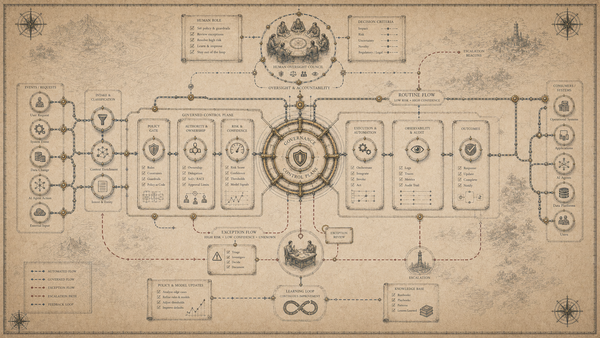
Human oversight in AI systems must be designed as a control capability, not treated as a reassuring box at the end of a workflow.
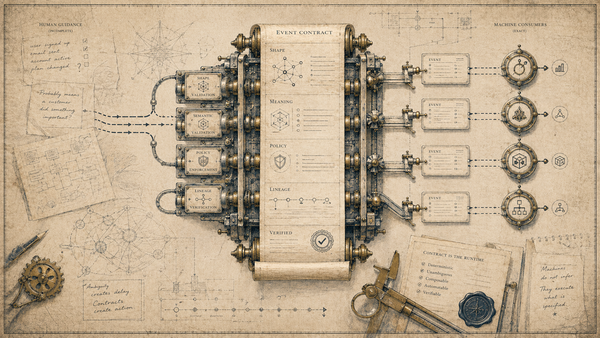
Event contracts used to be guidance. With agents on the other end, they're the thing the system actually runs on.
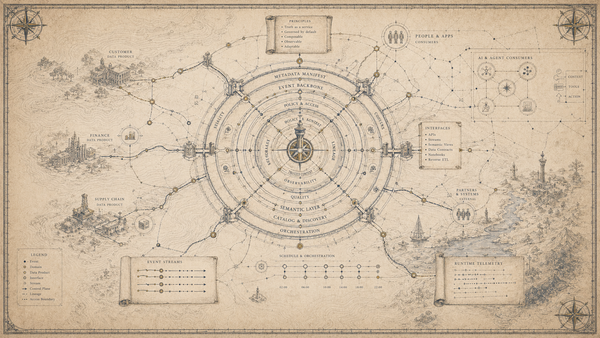
The real architectural decision isn't how fast you process data. It's what you choose to treat as a fact, and whether the machines around it can reason about those facts without asking permission.
Modern data platforms are becoming operating systems for decisions, automation, governance, and the flow of organizational work.
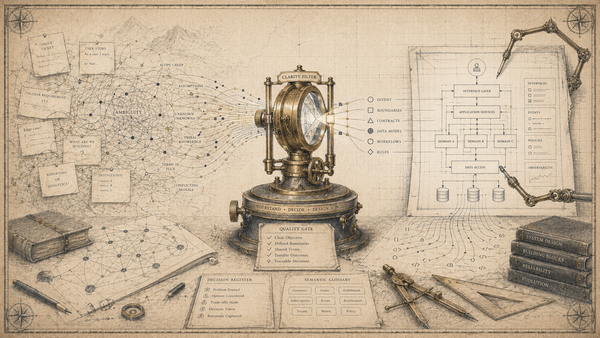
AI-assisted development rewards engineering clarity because faster execution amplifies the quality, ambiguity, and governance of the system around it.
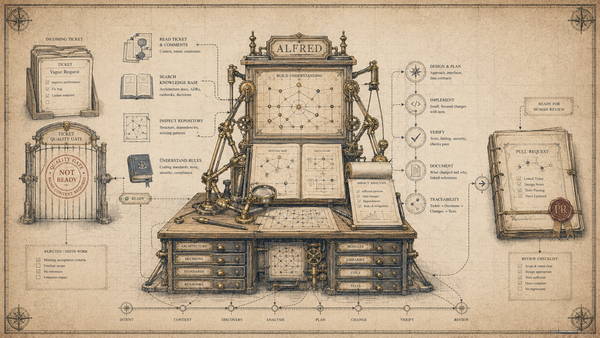
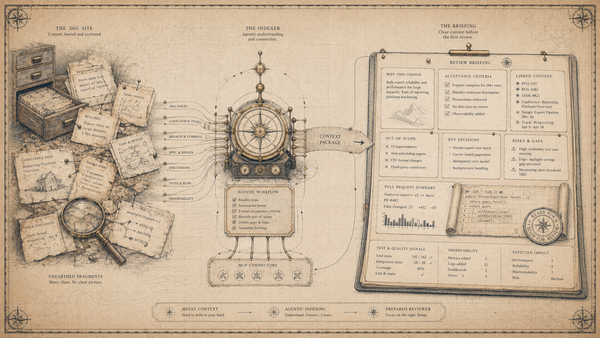
Alfred shows why agentic engineering starts before code: tickets need enough context, constraints, and evidence for machines to help safely.
AI-assisted PR review only works when agents can bring issue context, implementation evidence, and review intent into the same engineering surface.